
Kanhangad: A Key Battleground in Kerala Elections 2026
As Kerala approaches the Legislative Assembly Elections 2026, constituency-level voter sentiment analysis is becoming essential for political parties, media organisations, and election observers.
Semiotica.ai, a global leader in AI-driven electoral intelligence, presents its Phase 1 analysis for Kanhangad constituency. This report highlights voter sentiment trends, alliance positioning, and projected vote share, offering a data-backed view of one of North Kerala’s important political battlegrounds.
Kanhangad Constituency Overview: A Stronghold with Emerging Shifts
Kanhangad has traditionally been a Left Democratic Front (LDF)-leaning constituency, with a stable voter base and strong organisational presence. The contest has largely been between the LDF and the United Democratic Front (UDF), while the NDA has maintained a smaller footprint.
However, early indicators from the Kerala Elections 2026 suggest that the political landscape is gradually evolving. While the LDF continues to hold structural strength, the UDF is gaining ground in voter perception, pointing to a more competitive contest than in previous cycles.
Voter Sentiment Analysis: UDF Gains the Perception Edge
Semiotica’s AI-powered sentiment analysis reveals a noticeable shift in voter perception in Kanhangad:
| Alliance | Positive Sentiment Ranking |
|---|---|
| UDF | Very High |
| LDF | Moderate |
| NDA | Low |
| Alliance | Negative Sentiment Ranking |
|---|---|
| NDA | Very High (Negative Pressure) |
| UDF | Moderate |
| LDF | Low |
The UDF leads in positive sentiment, indicating growing acceptance among voters. At the same time, it maintains a relatively moderate negative sentiment, suggesting fewer resistance points.
The LDF, despite its strong base, shows higher negative sentiment than positive. This points to emerging dissatisfaction or increased scrutiny among certain voter groups.
The NDA continues to register lower engagement overall, though its sentiment remains relatively balanced.
Key Insight:
The LDF continues to dominate structurally, but the UDF is currently shaping the perception narrative.
Alliance Positioning: LDF Leads Governance, UDF Leads Inclusiveness
A deeper look at alliance positioning highlights how voters perceive each front across key dimensions:
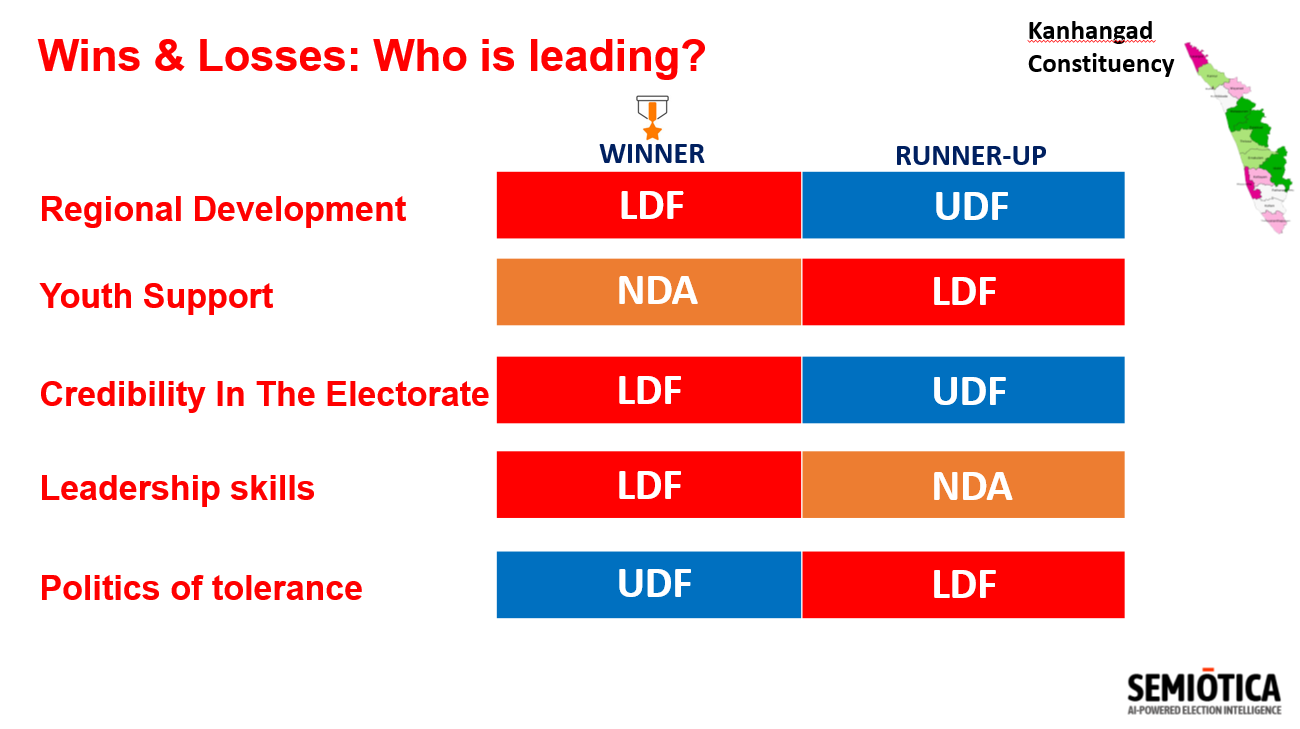
The LDF continues to lead in core governance metrics, including development, trustworthiness, and leadership. These strengths reinforce its image as an experienced and performance-driven alliance.
The UDF, meanwhile, leads in inclusiveness and remains competitive across other parameters. This suggests a growing connection with voters on issues related to social balance and representation.
The NDA stands out in youth appeal, indicating a targeted connection with younger voters, although this has not yet translated into significant electoral strength.
Strategic Insight:
LDF’s advantage lies in governance perception, while UDF’s opportunity lies in strengthening its emotional and narrative connect with voters.
Vote Share Trends: LDF Ahead, UDF Within Reach
According to the latest projections as of March 18, 2026:
- LDF: 46.24%
- UDF: 39.94%
- NDA: 13.82%
The LDF maintains a clear lead in vote share, supported by its established base and organisational strength. However, the margin is not overwhelming.
The UDF remains within striking distance, making Kanhangad a competitive constituency if current sentiment trends continue.
The NDA retains a smaller but stable vote share, which could still influence the outcome in a closely contested scenario.
Key Observation:
While LDF leads in votes, the narrowing gap reflects a gradual shift in voter dynamics.
Key Voter Trends Shaping Kanhangad
Several factors are influencing voter behaviour in Kanhangad as the election approaches.
There is a clear gap between governance perception and voter sentiment. While the LDF scores highly on performance metrics, the UDF is gaining ground in how voters feel.
Early signs of anti-incumbency are visible in the LDF’s higher negative sentiment. Though not decisive yet, this could impact margins if it continues to grow.
Inclusiveness is emerging as an important factor, with the UDF leading in this dimension. This indicates that voters are increasingly valuing representation and social balance.
At the same time, the NDA’s strong youth appeal suggests a gradual shift in political engagement among younger voters, which could shape future elections.
Strategic Outlook: Advantage LDF, But Contest Tightens
At this stage, the LDF remains the frontrunner in Kanhangad, backed by strong governance perception and a stable vote base.
However, the UDF’s lead in positive sentiment and its strength in inclusiveness indicate that the contest is becoming more competitive. If the UDF can convert perception into votes, the gap could narrow further.
For the NDA, the focus remains on consolidating its presence and expanding its appeal among younger voters.
Election Insight:
Kanhangad is evolving from a comfortable seat into a closely watched contest in Kerala Elections 2026.
Conclusion: A Constituency to Watch in 2026
The Phase 1 analysis by Semiotica.ai shows that while the LDF continues to lead in Kanhangad, the electoral dynamics are shifting.
The UDF’s growing acceptance among voters has introduced a new competitive edge, making this constituency more open than in previous elections.
In Kerala’s politically aware electorate, shifts in sentiment often precede electoral change. Kanhangad reflects this pattern clearly.
As the campaign progresses, the final outcome will depend on how effectively each alliance responds to voter concerns and translates its strengths into votes.
👉 Follow Semiotica.ai for real-time election intelligence and AI-driven insights into Kerala 2026.

Add a Comment